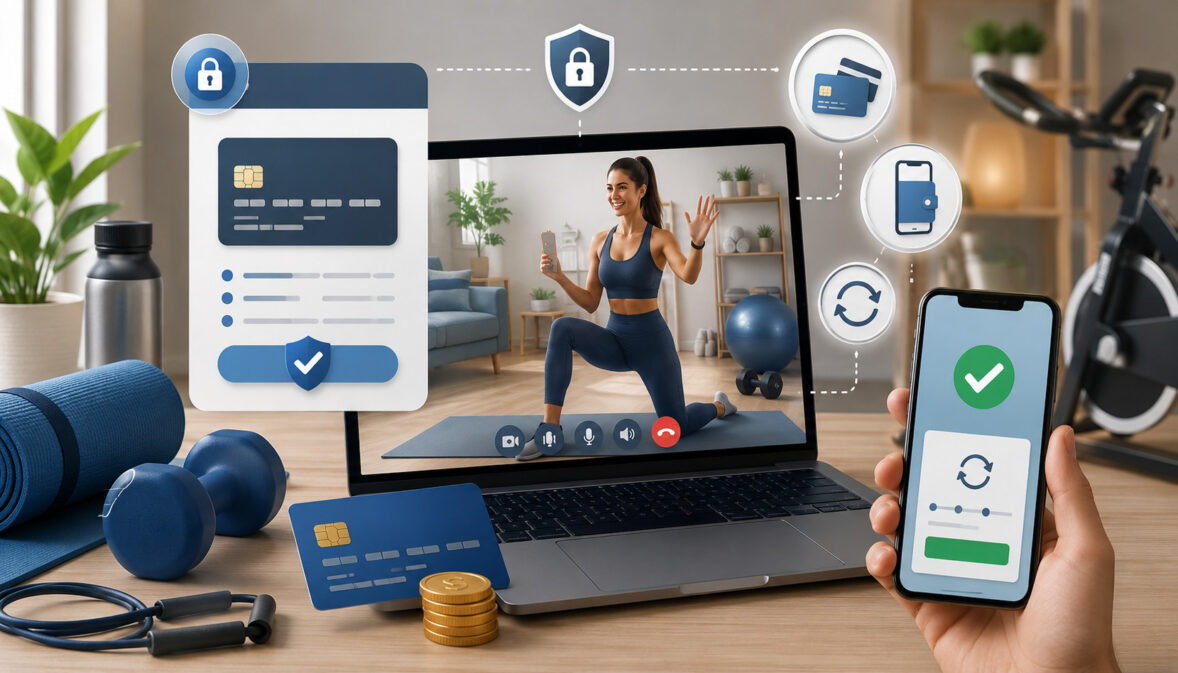
Online fitness has moved far beyond occasional video classes. Many fitness professionals now sell live virtual sessions, on-demand workout libraries, digital coaching programs, nutrition support, class packs, challenges, hybrid memberships, and downloadable training plans.
Because these services are delivered online, the payment experience must be just as digital, convenient, and dependable as the program itself.
Processing payments for online fitness programs is about more than accepting a card. It involves online checkout, payment authorization, recurring billing, digital receipts, secure payment storage, failed payment recovery, refund handling, reporting, and clear communication with clients.
When these pieces work together, clients can sign up quickly, access their program without confusion, and continue paying for ongoing services with less friction.
For fitness businesses, a smooth payment system supports stronger cash flow and a better member experience.
It helps reduce manual billing work, prevents missed payments, gives billing teams better records, and makes it easier to sell online workout program payments, virtual training payments, fitness class payments, and fitness membership payments from almost anywhere.
A reliable online fitness payment processing setup also builds trust. Clients want to know what they are paying for, when they will be billed, how their payment data is protected, and how they can update or cancel their payment method if needed. Clear payment processes help reduce misunderstandings, chargebacks, and support issues.
This guide explains how processing payments for online fitness programs works, what payment methods to consider, how recurring fitness payments operate, how to protect client payment data, and how online fitness businesses can create a secure, convenient, and organized billing experience.
What Does Processing Payments for Online Fitness Programs Mean?
Processing payments for online fitness programs means using digital payment tools to collect money from clients or members for virtual fitness services.
These services may include online coaching, video workout programs, live-streamed classes, personal training sessions, digital workout plans, fitness challenges, nutrition coaching, class packs, membership communities, and subscription-based content libraries.
Instead of relying on cash, checks, or in-person terminals, online fitness payments usually happen through websites, apps, payment links, online checkout pages, invoices, member portals, or booking tools.
A client chooses a program, enters payment information, authorizes the purchase, and receives confirmation. Behind the scenes, a payment gateway, payment processor, merchant account, and billing system help move the transaction through the payment network and into the business’s account.
For beginners, it may help to think of online fitness payment processing as the digital version of a front desk. It handles checkout, confirms payment, sends receipts, records the transaction, and helps the client access the service.
For larger gyms, studios, or wellness businesses, it may also connect to scheduling tools, membership portals, customer accounts, subscription billing, reporting dashboards, and accounting workflows.
The goal is not only to collect money. The goal is to make payment simple for the client and manageable for the business. A strong system should reduce friction, support secure online fitness payments, keep billing records organized, and give clients confidence before, during, and after checkout.
How Online Fitness Payments Work
Online fitness payments usually begin when a client selects a service. This may be a monthly membership, a virtual class, a digital workout plan, a personal training package, a challenge, a course, or a one-time workshop. The client reviews the price, billing terms, and program details before moving to checkout.
At checkout, the client enters payment details or selects a saved payment method. The payment gateway securely captures the payment information and sends it for authorization. The payment processor communicates with the card or bank network to confirm whether the payment can be approved.
If approved, the transaction is recorded, the client receives confirmation, and the business can provide access to the program.
Several systems may be involved in this process:
- The checkout page collects payment details.
- The payment gateway securely transmits transaction data.
- The payment processor handles authorization and settlement.
- The merchant account receives processed funds.
- The billing platform manages subscriptions, invoices, receipts, and payment updates.
- The fitness platform may unlock access to classes, videos, or member portals.
For digital fitness payments, timing matters. A client may expect immediate access after payment. That means confirmation emails, login instructions, booking details, digital receipts, and program access should be automated whenever possible.
Why Online Fitness Programs Need Reliable Payment Processing
Online fitness programs often serve clients who never visit a physical location. That makes the payment experience one of the first trust signals a client sees. If checkout is slow, confusing, or limited to one payment method, a potential client may leave before completing signup.
Reliable payment processing for fitness coaches, studios, and digital fitness creators supports different sales models. A business may sell a one-time digital program, a recurring membership, a virtual class pack, a personal coaching package, or an installment plan. Each model has different billing needs, and a basic payment setup may not be enough as the business grows.
For example, a coach selling online personal training payments may need invoices, card-on-file authorization, payment links, and installment billing.
A studio offering virtual classes may need class booking, online checkout, membership access, and recurring fitness payments. A digital creator selling a workout library may need fitness subscription billing, automatic renewals, and access controls.
Reliability also affects cash flow. Missed payments, unclear renewal terms, expired cards, failed payment follow-up gaps, and poor reconciliation can create unnecessary revenue leakage. A dependable payment system helps businesses track what was paid, what failed, what was refunded, and what still needs attention.
Security is equally important. Online payments involve sensitive data, so businesses should use secure payment gateways, tokenization, encryption, and practices aligned with payment security standards. The PCI Security Standards Council provides payment security resources for organizations that handle card payments.
Common Types of Online Fitness Program Payments
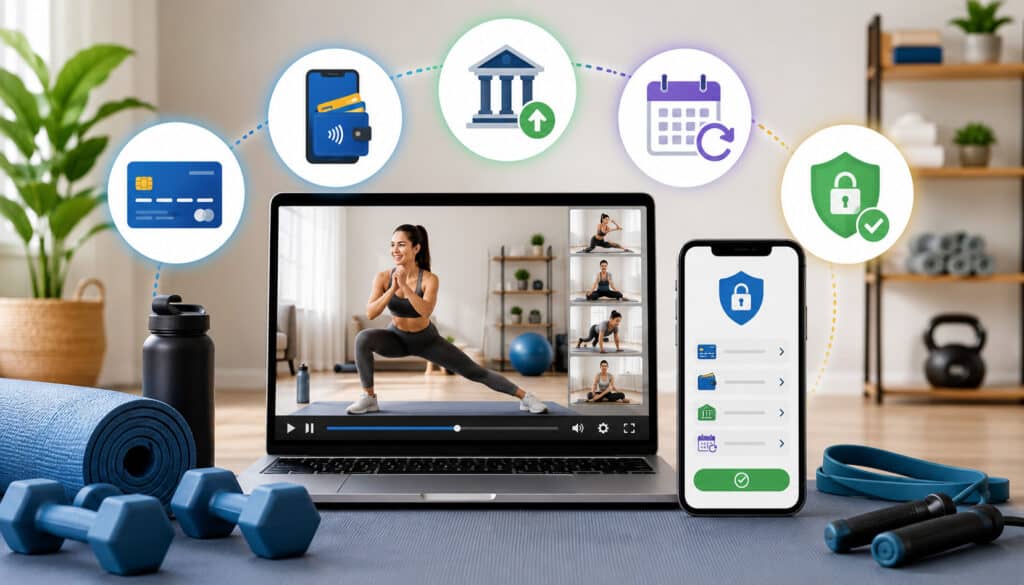
Online fitness businesses use several payment models depending on what they sell. Some programs are simple one-time purchases, while others depend on recurring billing, installment schedules, class credits, or ongoing memberships. Understanding these models helps fitness businesses choose the right checkout structure and avoid confusing clients.
One-time payments are common for digital workout plans, recorded class bundles, short-term challenges, workshops, nutrition guides, and course payments. The client pays once and receives access to a defined product or program.
Recurring fitness payments are used for monthly memberships, coaching communities, on-demand video libraries, hybrid gym memberships, and ongoing virtual training plans. These payments continue until canceled, paused, expired, or changed according to the program terms.
Class packs and session packages are also common. A client may purchase five virtual classes, ten personal training sessions, or a limited package of coaching calls. The payment happens upfront, but service delivery may happen over time.
Installment plans may be useful for higher-cost coaching programs, transformation programs, or longer digital courses. Instead of charging the full amount upfront, the business collects several scheduled payments. This can make online coaching payments more manageable for clients, but it requires clear authorization and tracking.
The best payment model depends on program length, client expectations, price point, support level, and delivery format. A low-cost recorded class may work well as a one-time purchase. A full coaching program with weekly check-ins may need subscriptions or installments. A hybrid studio membership may require both online and in-person billing support.
One-Time Payments for Digital Fitness Products
One-time payments are often the easiest starting point for online fitness programs. A client chooses a digital product, pays once, and receives access. This model works well for downloadable workout plans, recorded class bundles, nutrition guides, short challenges, virtual workshops, mobility programs, and beginner fitness courses.
The key to successful one-time online fitness payments is clarity. Clients should know exactly what they are buying, what is included, how long they will have access, and whether the purchase is refundable. If a digital workout plan includes videos, PDFs, coaching notes, or a private portal, those details should be visible before payment.
Immediate confirmation is important. After payment, the client should receive a digital receipt and clear access instructions. If the program is delivered by email, the email should arrive quickly. If access happens through a membership portal, login instructions should be simple. If the product is downloadable, the client should know where to find it.
One-time payments also require accurate records. Businesses should track product sales, refunds, access issues, and customer support requests. This helps identify which programs sell well and where clients may experience friction.
Recurring Fitness Payments and Subscriptions
Recurring fitness payments are central to many online fitness businesses. They allow clients to pay automatically for ongoing access to workout libraries, coaching groups, membership communities, virtual class schedules, hybrid fitness programs, or monthly training plans.
This can create more predictable revenue and reduce the need to manually request payment each month.
Fitness subscription billing works best when terms are clear before signup. Clients should understand the billing amount, billing frequency, renewal date, cancellation process, and what happens if a payment fails.
If the program includes a trial, promotional price, minimum commitment, or installment schedule, that information should be easy to review before payment authorization.
Payment authorization is especially important for recurring programs. A client should actively agree to the recurring charge and receive digital receipts after each billing event. This helps reduce confusion and provides a record if questions arise later.
Failed payment recovery is another important part of recurring fitness payments. Cards expire, banks decline transactions, and accounts may have insufficient funds. A good billing workflow should send friendly reminders, allow clients to update payment methods, retry failed payments appropriately, and provide a grace period when suitable.
For fitness businesses that rely on monthly memberships, resources about fitness membership payments can help explain how card-on-file billing, ACH payments, failed payment handling, and membership terms fit into daily operations.
Payment Methods for Online Fitness Programs

Online fitness businesses should consider payment methods that match how clients prefer to pay. Most clients expect a fast digital checkout experience, especially when signing up from a phone. Offering the right mix of payment options can reduce friction and help more clients complete purchases.
Common payment methods include credit card payments, debit card payments, ACH payments, digital wallets, mobile payments, payment links, invoices, and subscription billing. Some businesses also use member portals where clients can save payment methods, view receipts, update cards, and manage plans.
Credit and debit cards are often used for online checkout because they are familiar and fast. Digital wallets can make mobile checkout even quicker because clients may not need to type card details manually.
ACH payments may work well for recurring memberships or higher-ticket coaching plans, especially when clients are comfortable authorizing bank-based billing.
Payment links are useful for remote sales. A fitness coach can send a secure link after a consultation, a studio can send a link for a workshop, or a billing team can send a link to update a failed payment. Invoices can work well for custom coaching packages or business wellness programs where the payment amount varies.
The right payment mix depends on the business model. A digital creator selling low-cost programs may focus on cards and digital wallets. A coach selling premium monthly support may need invoices, payment links, subscriptions, and installments. A studio offering online classes may need class booking, memberships, and recurring billing.
Credit Cards, Debit Cards, and Digital Wallets
Credit cards and debit cards remain common for online fitness payments because they are widely understood and easy to use. Clients can enter card details at checkout, save a payment method for future billing, and receive digital receipts after payment.
For fitness businesses, card payments can support one-time purchases, recurring memberships, virtual training payments, and online workout program payments.
Digital wallets can improve the mobile checkout experience. Many clients browse fitness programs from phones, and typing card details on a small screen can create friction. A digital wallet may allow faster checkout by using a stored payment credential. This can be helpful for fitness class payments, drop-in virtual sessions, and quick online signups.
Saved payment methods can also support convenience, but they should be handled securely. Instead of manually storing card numbers, businesses should use tokenization through a secure payment system. Tokenization replaces sensitive card data with a protected token that can be used for future transactions without exposing full payment details.
Digital receipts are also important. They give clients proof of purchase and help businesses maintain organized records. Receipts should include the business name, amount, date, payment method reference, program purchased, and support contact details when appropriate.
ACH Payments and Bank-Based Billing
ACH payments allow clients to pay directly from a bank account after providing proper authorization. For online fitness programs, ACH payments may be useful for recurring memberships, higher-ticket coaching packages, long-term programs, and predictable monthly billing.
One advantage of ACH payments is that they can be useful for ongoing billing relationships. A client who joins a monthly coaching program or virtual membership may authorize bank-based payments instead of using a card. For businesses with many recurring fitness payments, this can be part of a broader billing strategy.
However, ACH payments require careful communication. Clients should understand the amount, timing, authorization terms, and what name may appear on their bank statement. ACH payments can also take longer to process than card payments, and returns may occur due to insufficient funds, incorrect account information, closed accounts, or revoked authorization.
Businesses using ACH should maintain authorization records and provide receipts or confirmations. They should also have a process for handling returned payments and updating bank information.
For fitness businesses evaluating bank-based billing, a guide to ACH payment processing for gyms and fitness centers can provide useful context for memberships, class packs, and personal training fees.
ACH is not always the right fit for every online fitness payment. For quick drop-in classes or low-cost digital products, cards and digital wallets may be easier. For recurring memberships or higher-ticket programs, ACH can be worth reviewing.
Online Fitness Payment Processing Comparison Table
Different payment options serve different purposes. The best setup for processing payments for online fitness programs may include several methods rather than only one. A fitness coach, studio, or digital program creator should consider client convenience, billing frequency, transaction size, support workload, security, and reporting before choosing the right mix.
The table below compares common payment options and how they may fit online fitness programs.
| Payment Option | Best For | Benefits | What to Review |
| Credit/debit cards | Online memberships and classes | Fast and familiar checkout | Declines, expired cards, and processing costs |
| Digital wallets | Mobile-first clients | Quick payment experience | Wallet compatibility and checkout setup |
| ACH payments | Recurring programs | Useful for predictable billing | Authorization and return handling |
| Payment links | Remote sales and follow-ups | Easy to send by email or message | Link security and confirmation |
| Invoices | Custom coaching packages | Flexible for personalized services | Payment deadlines and reminders |
| Subscriptions | Ongoing fitness programs | Supports recurring revenue | Cancellation and renewal terms |
| Installments | Higher-cost programs | Makes payments more manageable | Clear schedule and authorization |
A payment method should not be judged only by cost. A slightly lower-cost option may still create problems if it increases confusion, delays access, or makes reporting harder. Likewise, a convenient payment option may be valuable if it improves signup completion and reduces billing support.
Businesses should also think about software compatibility. A payment gateway for fitness programs may need to connect with booking software, membership portals, course platforms, customer records, email automation, accounting systems, or reporting dashboards. The easier these tools work together, the less manual cleanup the team will need later.
How to Choose the Right Payment Mix
The right payment mix depends on what the fitness business sells and how clients buy. A virtual yoga studio selling live classes may need online checkout, class booking, digital wallets, and recurring memberships.
A personal trainer offering customized coaching may need invoices, payment links, installments, and card-on-file billing. A digital fitness creator selling recorded programs may need one-time checkout, course access, digital receipts, and refund tracking.
Price point matters. Lower-cost fitness class payments should be fast and simple. Higher-cost online coaching payments may need more detailed payment terms, deposit options, payment schedules, and signed authorization. Recurring programs need renewal clarity, failed payment recovery, and easy payment updates.
Audience behavior also matters. If clients often sign up from social media or mobile messages, payment links and mobile-friendly checkout can be useful. If clients buy through a member portal, saved payment methods and subscription tools may matter more. If clients are corporate groups or wellness program participants, invoices may be part of the process.
Software setup should guide the decision. A business should review whether its payment system supports recurring billing, online checkout, ACH payments, digital wallets, mobile payments, invoices, refunds, reporting, and integrations.
Why Payment Flexibility Matters Online
Payment flexibility matters because online clients have limited patience for friction. If checkout takes too long, requires too many steps, or does not support their preferred method, they may abandon the purchase. This is especially true when clients are signing up from a mobile device.
Offering multiple payment methods can make online fitness checkout easier. A client may prefer a card for a one-time course, a digital wallet for a quick class, ACH for a monthly membership, or an invoice for a custom coaching plan. Flexibility can help clients complete payment in the way that feels most convenient.
Payment flexibility also supports different service types. Online personal training payments may need installments. Fitness membership payments may need recurring billing. Fitness class payments may need fast checkout. Digital fitness billing may require both one-time purchases and subscriptions.
However, flexibility should still be organized. Too many disconnected tools can create reporting problems, duplicate records, and reconciliation issues. The best approach is to offer practical options through a payment system that keeps transactions, receipts, refunds, and customer records centralized.
Flexible payment options can also support member retention. When clients can update payment methods easily, choose a suitable billing structure, and understand their payment terms, they are less likely to experience avoidable billing frustration.
Online Checkout for Fitness Programs

Online checkout is the moment where interest turns into payment. For online fitness programs, checkout must clearly show what the client is buying, how much it costs, when billing occurs, what access is included, and what happens next. A strong online fitness checkout can improve signup completion and reduce support questions.
A good checkout flow should be simple. The client selects a program, reviews pricing, enters payment details, authorizes the payment, and receives confirmation.
If the program includes recurring billing, the renewal terms should be visible before authorization. If the program includes limited access, cancellation restrictions, or refund conditions, those details should also be easy to find.
Mobile design is critical. Many clients discover online fitness programs through social media, email, search, or messaging apps. They may complete checkout from a phone. If the page is slow, buttons are too small, forms are hard to fill out, or payment options do not display correctly, checkout abandonment can increase.
Checkout should also connect to access. After payment, the client should receive a digital receipt, confirmation email, login instructions, class link, booking confirmation, or next-step instructions. When payment and access are not connected clearly, clients may feel unsure whether the signup worked.
For online fitness businesses that want to understand payment costs, billing workflows, and transaction records, resources on understanding processing fees for fitness businesses can help explain how different payment activities affect revenue and cash flow.
Building a Simple Checkout Flow
A simple checkout flow removes unnecessary obstacles. Clients should not have to search for the price, guess what is included, or complete too many fields before payment. The easier the process feels, the more likely they are to finish signup.
Start with visible pricing. The program page should clearly show whether the payment is one-time, recurring, installment-based, or part of a package. If taxes, fees, setup costs, or add-ons apply, those should be shown before final authorization.
Keep forms short. Ask only for information needed to process payment and deliver the program. Long forms may be better after signup, especially for health goals, preferences, intake questions, or coaching details.
Use clear buttons and next steps. Buttons such as “Pay and Start Program” or “Join Membership” can help clients understand what happens. After payment, the confirmation page should tell the client what to expect next.
Security indicators can also support confidence. A secure checkout page, trusted payment gateway, and clear privacy practices can help clients feel more comfortable entering payment details.
Reducing Abandoned Checkouts
Abandoned checkout happens when a client starts payment but does not finish. For online fitness programs, this may happen because pricing is unclear, the page loads slowly, the process has too many steps, or the client does not trust the checkout page.
Common causes include hidden fees, forced account creation, limited payment methods, confusing program descriptions, unclear cancellation terms, and long forms. Some clients may also abandon checkout if they are unsure whether the program fits their needs.
There are practical ways to reduce abandonment. Keep pricing visible, show what is included, allow guest checkout when possible, offer familiar payment methods, and reduce unnecessary fields. If account creation is required, explain why and make it part of the access process.
Confirmation and reassurance also matter. Add clear statements about digital receipts, secure payment handling, program access, refund terms, and support contacts. Avoid vague claims and focus on practical information that helps clients make a confident decision.
Follow-up can help when appropriate. If a client begins checkout but does not complete it, a reminder email may encourage them to return. The message should be helpful, not pushy, and should answer common questions about program access, payment methods, or billing terms.
Recurring Billing for Online Fitness Memberships
Recurring billing helps online fitness programs create predictable revenue and consistent access for clients. Instead of asking clients to pay manually each month, the billing system charges an authorized payment method according to the agreed schedule.
This can support virtual memberships, coaching groups, online workout libraries, recurring class access, and hybrid fitness programs.
For clients, recurring billing can be convenient. They do not need to remember to pay each month, and their access can continue without interruption. For businesses, recurring fitness payments reduce manual billing work and make revenue easier to forecast.
However, recurring billing must be handled carefully. Clients should know the billing amount, frequency, start date, renewal date, cancellation process, and any minimum commitment. If terms are hard to find, disputes are more likely.
Subscription payments also require ongoing management. Cards expire, payment methods fail, clients request cancellations, and memberships change. A good billing process should include payment update links, failed payment reminders, digital receipts, refund tracking, and clear cancellation workflows.
The Federal Trade Commission provides consumer information and enforcement resources related to refunds, subscriptions, and unfair or deceptive practices, making transparency around billing terms especially important for businesses that sell recurring services.
Payment Authorization for Recurring Programs
Payment authorization is the client’s agreement to be billed. For recurring fitness programs, authorization should be clear before the first charge. Clients should understand the amount, schedule, start date, renewal terms, cancellation process, and what service they receive in exchange.
This authorization may happen through an online checkout checkbox, digital agreement, membership portal, invoice approval, or signed payment form. The exact process may vary, but the goal is the same: the client should knowingly agree to recurring charges.
Clear recurring billing language reduces confusion. Avoid hiding renewal terms in hard-to-find pages. Place key terms near the payment button, in the checkout summary, and in the confirmation email. Digital receipts should be sent after each successful billing event.
Cancellation terms should also be specific. Clients should know how to cancel, when cancellation takes effect, whether partial refunds are available, and whether access continues until the end of the billing period. Businesses should avoid making cancellation harder than signup.
Handling Failed Payments and Payment Updates
Failed payments are common in fitness subscription billing. A card may expire, a bank may decline a transaction, a client may replace a card, or an account may have insufficient funds. Without a plan, failed payments can interrupt access and reduce revenue.
A practical failed payment workflow should be polite and organized. The first message should explain that the payment did not go through and provide a secure way to update payment information. The message should avoid blame and make the next step easy.
Retry schedules can help recover payments. A billing system may retry a failed transaction after a short period, but businesses should avoid excessive retries that frustrate clients. A clear grace period may be useful for ongoing memberships, especially when access should not stop immediately.
Payment update links are helpful because they allow clients to update cards or bank details securely without sending sensitive information by email or message. Staff should never ask clients to send full card details through unsecured channels.
Tracking failed payment rates can reveal larger issues. If many payments fail, the business may need better card updater tools, clearer billing dates, more payment methods, or improved client communication before renewal.
Payment Security for Online Fitness Programs
Payment security is essential for online fitness programs because clients trust the business with sensitive payment information. A secure payment process protects client data, supports professional operations, and reduces the risk of fraud, disputes, and reputational harm.
Security begins with using a reliable payment gateway and secure checkout. Businesses should avoid collecting or storing full card numbers manually. Instead, they should use hosted payment pages, tokenized saved payment methods, encrypted data transmission, and secure member portals.
PCI compliance is an important part of card payment security. The PCI Security Standards Council develops payment security standards and resources for businesses and payment stakeholders. Online fitness businesses should work with payment tools that support secure card handling and reduce direct exposure to sensitive card data.
Access control also matters. Only authorized staff should be able to view billing records, issue refunds, update accounts, or manage subscriptions. Strong passwords, limited permissions, and careful staff training can reduce internal errors.
Fraud prevention should be part of the workflow. Businesses should monitor unusual transaction activity, repeated failed attempts, mismatched billing information, refund abuse, and suspicious chargeback patterns. Clear program descriptions and receipts also help reduce disputes caused by confusion.
Protecting Client Payment Data
Protecting client payment data starts with not handling more data than necessary. Online fitness businesses should avoid writing down card numbers, storing card details in spreadsheets, accepting full card numbers through messages, or keeping sensitive payment information in unsecured documents.
Hosted payment pages can reduce risk because clients enter payment information directly into a secure payment environment. Tokenization can allow future billing without storing full card details. Secure portals can let clients update payment information themselves.
Staff access should be limited. A coach, assistant, or front desk team member may need to see whether a payment succeeded, but they usually do not need access to sensitive payment details. Permissions should match job responsibilities.
Digital receipts also help protect both the client and business. Receipts confirm the amount paid, the program purchased, and the date of payment without exposing sensitive information. They create a record that can be reviewed later if questions arise.
Reducing Fraud and Chargeback Risk
Chargebacks can happen when a client disputes a payment with their card issuer. Some disputes are caused by fraud, but many are caused by confusion. A client may not recognize a billing descriptor, may forget they signed up for a subscription, or may misunderstand cancellation terms.
Clear pricing and program descriptions reduce risk. Clients should know what they are buying before payment. If a program includes digital videos, coaching calls, community access, class credits, or nutrition guidance, the checkout page should describe those items accurately.
Confirmation emails and receipts also help. A receipt gives clients a record of payment. A confirmation email can include access instructions, support contact details, cancellation information, and refund policy reminders.
Refund and cancellation policies should be visible before checkout. Hidden or vague terms can increase frustration and disputes. A responsive support process can also prevent chargebacks because clients may contact the business first if they know how to reach someone.
Payment authorization records are important for recurring billing and installment plans. Businesses should maintain records showing that the client agreed to the payment schedule and terms.
Payment Processing for Different Online Fitness Business Models
Not every online fitness business needs the same payment setup. A solo trainer, boutique studio, wellness coach, yoga instructor, Pilates teacher, digital course creator, and hybrid gym may all sell fitness services online, but their payment workflows can look very different.
A personal trainer may sell customized coaching programs, virtual sessions, and monthly check-ins. This model often needs payment links, invoices, subscriptions, installments, and card-on-file authorization. A studio offering live-streamed classes may need class booking, memberships, drop-in payments, and class packs.
A digital fitness creator may sell recorded workout libraries, courses, downloadable plans, and subscription communities. This model may require online checkout, course payments, recurring billing, access control, refund tracking, and digital receipts.
A hybrid gym may need payment systems that support both in-person and virtual services. Members may pay for facility access, live online classes, recorded programs, personal training, and add-ons through one account. In this case, gym payment processing and digital fitness payments should connect cleanly.
The payment system should match the way services are delivered. If clients pay before booking, checkout should connect to scheduling. If clients buy a subscription, billing should connect to access. If clients buy a course, payment should trigger enrollment. If clients buy coaching, payment records should connect to client management.
Online Personal Training and Coaching Payments
Online personal training payments often involve customized services. A trainer may provide virtual sessions, exercise programming, progress reviews, nutrition support, habit coaching, accountability check-ins, or private messaging. Because the service is personalized, the payment structure may vary.
Payment links are useful after a consultation. A trainer can send a secure payment link for a package, deposit, first month, or installment. Invoices may work well when packages are customized or when the client needs a written summary before paying.
Subscriptions can support ongoing coaching. A client may pay monthly for programming, check-ins, and virtual support. Installments may support longer coaching packages where the total cost is divided into scheduled payments.
Clear terms are important. Clients should know how many sessions are included, whether missed sessions expire, how rescheduling works, when billing happens, and how cancellation is handled. These details should be documented before payment.
Virtual Classes, Memberships, and Digital Libraries
Virtual classes, memberships, and digital libraries often need scalable payment workflows. A studio or creator may sell drop-in live classes, class packs, monthly memberships, recorded workout libraries, private communities, or bundled access to multiple programs.
For live virtual classes, payment should connect to booking. Clients should be able to choose a class, pay online, receive confirmation, and get access instructions. If class links are sent separately, the timing should be reliable.
For membership models, recurring billing is usually important. Clients may pay monthly for access to live classes, recordings, challenges, community spaces, or premium content. The billing system should manage renewals, failed payments, cancellation requests, and digital receipts.
Digital libraries need access control. When a client pays, access should begin according to the program terms. If a subscription ends, access should update automatically where possible. Manual access management can become difficult as membership grows.
Studios and creators should also review reporting. They may need to know which classes sell best, which memberships retain clients, which programs produce refunds, and where payment failures occur.
Reporting, Reconciliation, and Cash Flow
Payment processing affects more than checkout. It also affects reporting, reconciliation, and cash flow. Online fitness businesses should understand how payments move from checkout to processor reports to bank deposits and accounting records.
Payment reports show what clients paid, what payment method they used, which program they purchased, whether the payment succeeded, and whether any refunds or chargebacks occurred. These reports help owners and billing teams understand revenue performance.
Reconciliation means comparing payment records with bank deposits. This is important because deposits may be grouped, fees may be deducted, refunds may reduce deposit amounts, and chargebacks may appear separately. Without reconciliation, a business may think revenue is missing when it is actually grouped or offset.
Cash flow matters for online fitness programs because revenue may come from subscriptions, class packs, one-time purchases, installments, and coaching packages. Deposit timing affects payroll, rent, software costs, marketing, equipment purchases, and contractor payments.
A strong reporting workflow should help businesses track revenue by category. For example, a fitness business may separate virtual classes, memberships, online coaching payments, course payments, digital workout plans, and merchandise add-ons. This makes it easier to see which programs are growing and which need adjustment.
Tracking Online Fitness Revenue
Tracking revenue helps online fitness businesses make better decisions. Instead of only looking at total deposits, owners should review the metrics that explain performance.
Useful payment metrics may include:
- Monthly recurring revenue
- Payment success rate
- Failed payment rate
- Refund rate
- Chargeback rate
- Average order value
- Churn rate
- Program revenue by category
- Subscription growth
- Class pack sales
- Installment completion rate
Monthly recurring revenue helps measure subscription stability. Payment success rate shows how reliably billing is working. Failed payment rate reveals whether cards, bank payments, or communication processes need attention.
Refund and chargeback rates can show whether program descriptions, cancellation terms, or support processes need improvement. Average order value helps evaluate pricing and package structure. Churn rate shows how often clients cancel or stop paying.
Program-level reporting is also valuable. A business may discover that online workout program payments are growing, while virtual training payments are declining. Or it may find that class packs sell well but memberships retain clients longer.
Reconciling Payments With Bank Deposits
Reconciling payments with bank deposits keeps financial records accurate. The process compares checkout records, processor reports, refunds, fees, chargebacks, and actual bank deposits.
This matters because deposit amounts may not match individual sales. A processor may batch several transactions into one deposit. Fees may be deducted before the deposit. Refunds may reduce the payout. Chargebacks may create separate debits. ACH returns may appear after the original payment.
A basic reconciliation workflow may include reviewing daily or weekly transaction reports, matching deposits to processor batches, checking refunds and disputes, recording fees, and confirming that subscription billing reports match expected revenue.
Businesses should also organize records by payment type. Card payments, ACH payments, invoices, subscriptions, and payment links may have different reporting timelines. Keeping them organized reduces confusion during bookkeeping.
Accurate reconciliation also supports better planning. If the business knows when deposits arrive and how much is reduced by fees, refunds, and failed payments, it can manage cash flow more confidently.
Best Practices for Processing Payments for Online Fitness Programs
Processing payments for online fitness programs works best when the client experience and business workflow are designed together. A system that is easy for clients but difficult for staff can create operational problems. A system that is easy for staff but frustrating for clients can reduce signups and retention.
Start with secure online checkout. Use a payment gateway that supports encrypted transactions, tokenized saved payment methods, and digital receipts. Avoid manual card storage and unsecured payment collection.
Make checkout mobile-friendly. Clients often sign up from phones, especially for virtual fitness programs promoted through social media, email, or text. Buttons, forms, and payment options should be easy to use on small screens.
Offer multiple payment methods where useful. Credit cards, debit cards, digital wallets, ACH payments, invoices, and payment links can each serve a purpose. The right mix depends on the program and client behavior.
Use recurring billing for ongoing programs. Memberships, coaching communities, digital libraries, and hybrid access plans benefit from automated renewals. Make sure clients clearly authorize recurring charges.
Send digital receipts automatically. Receipts confirm payment and reduce support questions. They also support organized records.
Other practical best practices include:
- Clearly explain pricing and renewal terms.
- Provide easy payment update options.
- Use payment links for remote sales.
- Keep refund and cancellation policies visible.
- Monitor failed payments regularly.
- Track chargebacks and disputes.
- Review payment reports often.
- Train staff or assistants on billing workflows.
- Test the full checkout experience regularly.
Creating Clear Payment Policies
Payment policies should be easy to understand before a client pays. This does not mean the policy must be long. It means clients should be able to find the most important payment details at the right moment.
A good policy explains billing dates, renewal terms, cancellation process, refund eligibility, failed payment handling, and access rules. If a membership renews monthly, say when billing occurs. If a coaching package is nonrefundable after access begins, explain that before checkout. If cancellation must be submitted before the next billing date, make the timing clear.
Policies should also match the actual workflow. If the checkout page says a client can cancel through the portal, the portal should support cancellation or provide clear instructions. If refunds are reviewed manually, clients should know how to request one.
For recurring programs, renewal terms deserve extra attention. Clients should know whether the subscription continues until canceled, ends after a fixed term, or converts after a trial. Clear renewal language can reduce disputes and improve trust.
Testing the Client Payment Experience
Testing the client payment experience helps identify issues before real clients encounter them. Businesses should test checkout pages, payment links, invoice payments, mobile checkout, confirmation emails, subscription signup, failed payment messages, refund workflows, and cancellation instructions.
Testing should happen from the client’s perspective. Use a phone, tablet, and desktop. Check whether pricing displays correctly, buttons work, receipts arrive, access instructions are clear, and payment methods appear as expected.
Subscription testing is especially important. Review the signup confirmation, renewal receipt, failed payment message, payment update link, cancellation process, and access changes after cancellation. A small issue in recurring billing can affect many clients over time.
Testing should also include staff workflows. Can the billing team find payments quickly? Can they issue refunds? Can they view subscription status? Can they export reports? Can they identify failed payments? Can they respond to disputes with proper records?
Regular testing is useful after website changes, software updates, new program launches, price changes, or new payment methods. The online fitness checkout experience should not be set once and forgotten.
Common Mistakes to Avoid With Online Fitness Payments
Online fitness payments can fail when businesses focus only on collecting money and overlook the full client experience. Common mistakes can create abandoned checkouts, disputes, support requests, and revenue loss.
One mistake is unclear pricing. If clients cannot tell whether a program is one-time, recurring, or installment-based, they may hesitate or dispute the charge later. Pricing should be visible before payment authorization.
Another mistake is weak checkout design. Slow pages, too many form fields, hidden payment buttons, forced account creation, and unclear next steps can reduce completion. Online fitness checkout should be simple and mobile-friendly.
Limited payment methods can also create friction. Some clients prefer cards, others prefer digital wallets, and some may prefer ACH for recurring programs. Businesses do not need every payment method, but they should offer practical options for their audience.
Insecure card handling is a serious mistake. Businesses should not store full card details manually or request payment information through unsecured messages. Secure payment links, hosted checkout pages, and client portals are better options.
Poor failed payment follow-up can also hurt revenue. If declined payments are ignored, access may continue without payment or clients may lose access unexpectedly. A structured reminder and update process is important.
Making Payment Terms Hard to Find
Hidden payment terms often lead to frustration. If clients cannot easily find cancellation rules, refund policies, renewal terms, or access conditions, they may feel surprised when a charge occurs. Surprise is one of the fastest paths to disputes.
Payment terms should appear before checkout, not only after payment. For recurring fitness payments, clients should see the billing amount, frequency, renewal timing, and cancellation process before authorizing payment.
Refund policies should be specific. A digital product may have different refund rules than a live class or coaching package. If access begins immediately after payment, explain how that affects refund eligibility.
Cancellation language should also be practical. Clients should know how to cancel and when cancellation takes effect. If access continues until the end of the paid period, say so. If cancellation must be completed before the next billing date, make the timing visible.
Ignoring Mobile Checkout
Many online fitness clients sign up from a phone. They may click from a social post, email, text message, or class reminder. If mobile checkout is difficult, the business may lose signups even when the program is strong.
Mobile checkout problems include slow page speed, buttons that are too small, forms that are difficult to complete, payment options that do not display correctly, and pages that require excessive scrolling. Clients may abandon checkout if the process feels frustrating.
Digital wallets and saved payment methods can improve mobile checkout. They reduce typing and make payment faster. However, the checkout page must display those options clearly.
Mobile confirmation matters too. After payment, the client should receive a confirmation page that is easy to read on a phone. Emails should be formatted clearly, with program access instructions, class links, or portal details visible without confusion.
Testing mobile checkout regularly is essential. A desktop checkout may work perfectly while the mobile version has hidden errors. Since online fitness payments often begin on mobile, this step should not be ignored.
Choosing a Payment Solution for Online Fitness Programs
Choosing a payment solution for online fitness programs requires more than comparing transaction rates. The right system should support the way the business sells, bills, delivers access, communicates with clients, and reviews revenue.
Start with checkout design. The system should allow clear program selection, pricing display, payment authorization, discount codes, mobile checkout, confirmation emails, and access instructions. It should be simple for clients and manageable for staff.
Next, review payment methods. The system may need to support credit cards, debit cards, digital wallets, ACH payments, invoices, payment links, subscriptions, and installments. Not every business needs all of these, but the system should fit current needs and allow room to grow.
Recurring billing tools are important for memberships, coaching programs, and digital libraries. Look for features such as subscription creation, renewal receipts, card-on-file billing, payment update links, failed payment retries, cancellation tracking, and reporting.
Security should be a priority. The system should support secure payment collection, tokenization, encryption, access controls, and PCI-related safeguards.
The Consumer Financial Protection Bureau also provides consumer-facing information about payments and financial products, which can be useful background for understanding payment rights and responsibilities.
Reporting and integrations matter as the business grows. Payment reports should help track revenue, refunds, chargebacks, failed payments, and deposits. Integrations with booking tools, membership portals, accounting systems, email tools, or course platforms can reduce manual work.
Questions to Ask Before Choosing a Payment System
Before choosing a payment system, online fitness businesses should ask practical questions. The goal is to understand whether the tool supports real workflows, not just whether it can accept a payment.
Useful questions include:
- Does it support credit cards, debit cards, ACH payments, and digital wallets?
- Can clients pay through mobile-friendly checkout?
- Does it support recurring billing and fitness subscription billing?
- Can it send secure payment links?
- Can it create invoices for custom coaching packages?
- Does it support installments for higher-cost programs?
- Can clients update payment methods securely?
- Does it send digital receipts automatically?
- How does it handle failed payments?
- Can staff issue refunds and track disputes?
- What reporting is available?
- Does it connect with booking, membership, or course tools?
- What security features are included?
- What support is available when billing issues happen?
- What are the pricing, fees, and contract terms?
These questions help identify hidden limitations. A system that works for one-time digital products may not support recurring memberships well. A tool that supports subscriptions may not offer useful reporting. A system with low costs may require too much manual work.
Documentation Online Fitness Businesses Should Maintain
Organized documentation helps online fitness businesses manage payments professionally. It also supports customer service, accounting, dispute responses, and internal training.
Important records may include program terms, payment authorizations, digital receipts, refund records, cancellation requests, subscription records, dispute records, payment policies, processor agreements, billing procedures, and staff access rules.
For recurring billing, documentation is especially important. Businesses should keep records showing what the client agreed to, when they agreed, what amount was authorized, how often billing occurs, and how cancellation works.
Refund and cancellation records should be easy to locate. If a client asks about a refund or disputes a payment, the business should be able to review the original payment, program terms, communication history, and any action taken.
Internal billing procedures should also be documented. Staff should know how to send payment links, update subscriptions, handle failed payments, issue refunds, respond to disputes, and protect payment data. This reduces errors when multiple people help with billing.
Good documentation does not need to be complicated. It simply needs to be consistent, accessible to authorized team members, and updated when payment workflows change.
FAQs
What does processing payments for online fitness programs mean?
Processing payments for online fitness programs means collecting digital payments for virtual fitness services such as online classes, personal training, digital workout plans, coaching programs, memberships, and subscription content.
It includes online checkout, payment authorization, payment gateway processing, digital receipts, recurring billing, failed payment management, refunds, chargebacks, reporting, and secure payment handling. The goal is to help clients pay conveniently while giving the business organized records and reliable billing workflows.
What payment methods should online fitness programs accept?
Many online fitness programs accept credit cards, debit cards, digital wallets, ACH payments, invoices, payment links, and subscription payments. The best mix depends on the program type and client behavior.
For quick purchases, cards and digital wallets are often convenient. For recurring memberships or higher-ticket coaching, ACH payments, subscriptions, invoices, or installments may be useful. Businesses should choose payment methods that are easy for clients and manageable for the billing team.
Can online fitness programs use recurring billing?
Yes, recurring billing is commonly used for online memberships, virtual coaching programs, workout libraries, class subscriptions, and hybrid fitness services. It allows clients to authorize automatic payments on a set schedule.
Recurring billing should be clear before signup. Clients should understand the amount, billing date, renewal terms, cancellation process, and failed payment handling. Digital receipts and easy payment update options can make the experience smoother.
How can online fitness businesses make payments more secure?
Online fitness businesses can improve payment security by using secure payment gateways, hosted checkout pages, tokenization, encryption, strong passwords, limited staff access, and secure customer portals.
They should avoid storing card details manually or collecting full payment information through email, text, direct message, or unsecured forms. Using tools aligned with recognized payment security standards can reduce exposure to sensitive payment data.
What is the best way to collect payments for virtual training?
The best method depends on how the virtual training is sold. A one-time session may work well with online checkout or a payment link. A custom coaching package may need an invoice or installment plan. Ongoing coaching may need recurring billing or subscription payments.
Clear terms are important. The client should know what is included, how many sessions they receive, whether sessions expire, when billing happens, and how cancellations or rescheduling are handled.
How should online fitness businesses handle failed payments?
Failed payments should be handled with a clear and respectful process. Businesses can send friendly reminders, provide secure payment update links, retry payments according to a reasonable schedule, and offer a grace period when appropriate.
Staff should monitor failed payments regularly. If failures become common, the business may need better payment update tools, clearer billing reminders, more payment method options, or improved communication before renewal dates.
How can payment links help fitness coaches?
Payment links help fitness coaches collect payments remotely without building a full checkout page for every offer. A coach can send a secure link for a consultation, training package, digital plan, deposit, installment, or membership signup.
Payment links are especially useful after sales calls, direct messages, email conversations, or custom program discussions. They should lead to a secure payment page with clear pricing, program details, and confirmation after payment.
Conclusion
Processing payments for online fitness programs is a key part of running a successful digital fitness business. Whether a business sells virtual classes, online coaching, digital workout plans, video libraries, class packs, memberships, or hybrid services, the payment experience directly affects client trust, signup completion, revenue consistency, and daily operations.
A strong payment setup should make online fitness payments simple for clients and organized for the business. That means secure checkout, mobile-friendly design, flexible payment methods, recurring billing tools, digital receipts, clear payment policies, failed payment recovery, refund tracking, and reliable reporting.
Security and transparency should remain priorities. Businesses should use secure payment gateways, avoid manual card storage, protect client payment data, clearly explain billing terms, and keep accurate records. These practices can reduce confusion, support secure online fitness payments, and help prevent unnecessary disputes.
As online fitness continues to grow, payment systems should be reviewed regularly. Test checkout pages, update payment policies, monitor failed payments, review reports, and make sure clients can pay, update, renew, and cancel with clarity.
When payment workflows are smooth and trustworthy, fitness businesses can focus more energy on delivering valuable programs and building lasting client relationships.